
Key Takeaways
- Wandering is common with memory loss and often comes from stress, searching, or unmet needs.
- A secure setting lowers the risk of falls, injuries, and getting lost.
- Smart layouts, color cues, and natural light help your loved one feel calm and confident.
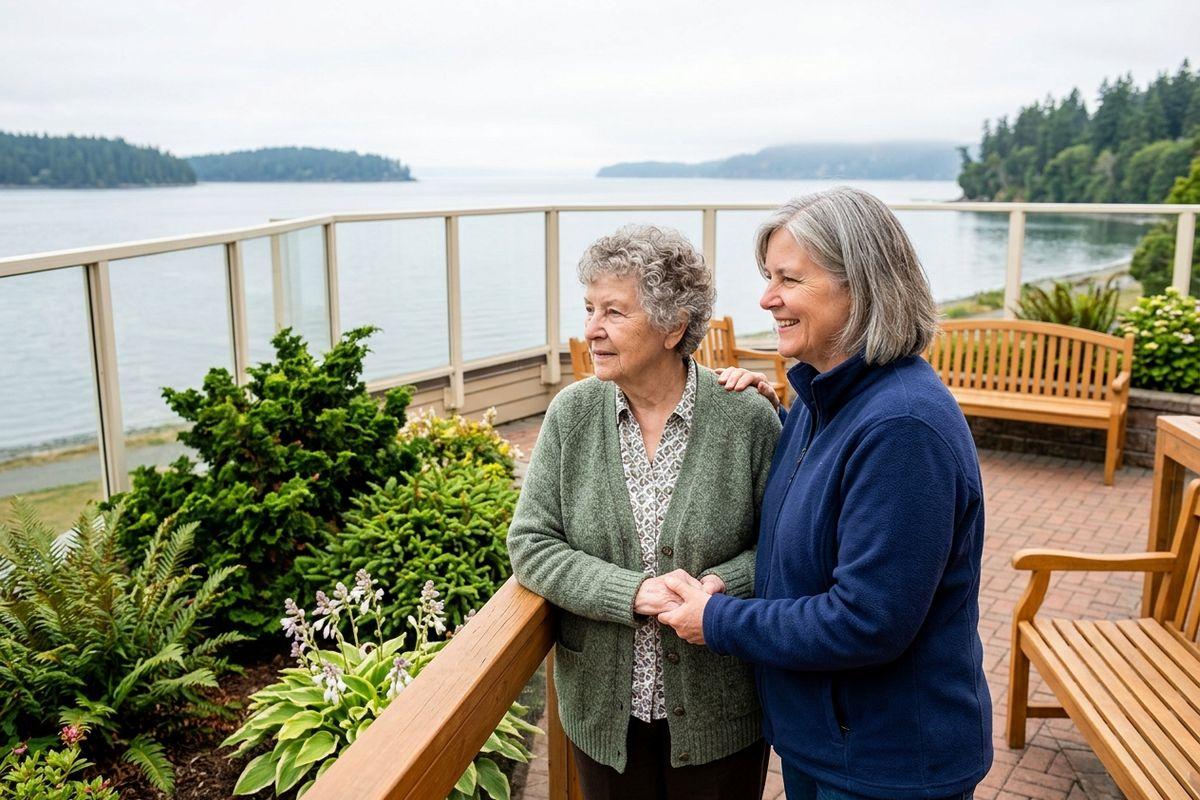
- Secure courtyards let residents enjoy fresh air and Puget Sound breezes safely.
- Meaningful activities and 24/7 support redirect restless energy with dignity.
How Safe Spaces Reduce Wandering in Memory Care
You’ve probably felt that jolt of worry when your loved one heads for the door, keys in hand, ready to go somewhere that no longer exists. That fear can keep you up at night. You want them safe, but you also want them to feel free and respected. The team at Mukilteo Memory Care understands this, offering specialized memory care built around dignity.
A purpose-built, secure environment prevents wandering by removing hazards, calming anxiety, and giving your loved one safe places to move, explore, and feel at home. The right setting protects without confining, so your family can finally breathe easier.
Why Wandering Happens in Dementia Care
Wandering can show up at any stage of memory loss. It isn’t bad behavior or stubbornness. It’s the brain doing its best to make sense of a world that feels unfamiliar.
Memory changes affect how a person navigates space and recognizes once familiar places. A hallway can suddenly look like a maze. On top of that, stress, boredom, or an unmet need like hunger or fatigue can push someone to start searching for comfort or a way out. The Alzheimer’s Association offers helpful insight into this wandering behavior.
Common Signs to Watch For
Spotting the early cues helps you respond with patience instead of panic. Many families notice these patterns before a person tries to leave.
- Restlessness, pacing, or repeated movements around the house
- Trouble finding the bathroom, bedroom, or other familiar spaces
- Talk of going home or heading to a job they once held
- Growing anxious near doors or windows late in the day, a pattern tied to sundown syndrome
How a Secure Setting Lowers the Risks
A thoughtfully secured community changes the whole picture. Instead of confusing exits and tension, your loved one moves freely inside spaces designed to keep them safe.
That safety brings real benefits you can feel right away:
- Fewer falls, injuries, and frightening moments of getting lost
- Less anxiety, since your loved one isn’t confronted by exits that confuse them
- Lasting peace of mind for you, knowing skilled people are always nearby
You stop being the full-time watchman. You get to be the daughter, son, or spouse again.
Why a Stable Routine Matters
Predictable days do a lot of quiet work. When meals, rest, and activities follow a familiar rhythm, confusion fades and stress drops. Your loved one knows what comes next, even when memory falters. A steady routine is one of the core parts of caring for someone with memory loss.
Familiar faces matter just as much. Seeing the same warm team each day builds comfort and trust, which makes restless wandering far less likely.
Design Features That Keep Residents Safe
Good design does more than look nice. Every hallway, color, and window can guide your loved one and ease their mind.
Smart Layouts and Wayfinding
Clear paths help residents find their way without frustration. The right details turn a confusing space into one that feels intuitive.
- Color cues and artwork mark the way to bedrooms and gathering spots
- Natural light pours in to support better sleep and ease sundowning
- Smaller, welcoming spaces feel calm instead of overwhelming
When the surroundings make sense, your loved one relaxes and the urge to wander softens.
Secure Courtyards and Walking Paths
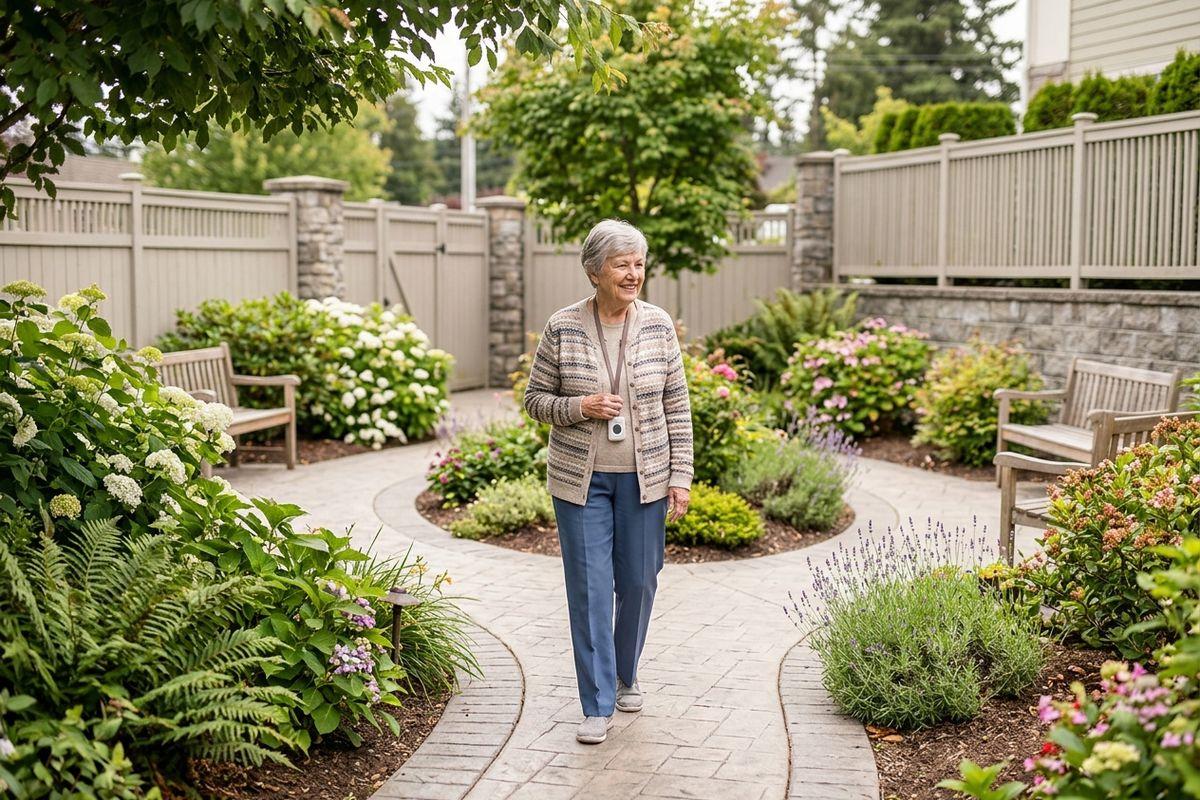
Fresh air shouldn’t mean risk. Secure outdoor areas let residents stroll, sit, and soak up the day with full freedom.
- Looping paths invite safe walks that never lead toward a busy street
- Fresh Puget Sound breezes and garden beds spark the senses, much like the benefits of gardening bring
- Quiet corners offer a spot to rest and feel calm
Your loved one can wander to their heart’s content, and stay perfectly safe doing it.
Caring Approaches That Make Wandering Safe
Walls and gardens are only part of the story. The team’s daily approach turns restless energy into something joyful and meaningful.
Instead of stopping movement, the team channels it:
- Meaningful activities redirect restless energy into purpose
- Music, art, and gardening fuel engagement and spark old memories, and music can ease Alzheimer’s symptoms
- Wearable alerts quietly notify the team the moment someone needs help
This way, your loved one stays active and proud, not boxed in.
How the Team Meets Daily Needs
Many wandering moments trace back to a simple unmet need. A trained team stays ahead of those needs before they spark distress. Regular meals, steady hydration, and good rest keep your loved one comfortable and grounded.
Support runs around the clock. Day or night, skilled people are present to offer a kind word, a snack, or a steady hand. That constant care keeps small worries from growing into bigger ones.
Find Calm and Confidence in Mukilteo
Mukilteo Memory Care offers a purpose-built community near the coast, where safety and dignity walk hand in hand. Your loved one can enjoy gardens, fresh sea air, and a team that celebrates what they still can do. For families who need a break, respite care provides short, fully supported stays so you can rest and recharge.
You don’t have to carry this alone. Book a tour today and see firsthand how our secure, warm setting can bring your family lasting peace of mind.